State & Local Priorities
State Strategy. Local Implementation.
Building stronger Maryland farms, a more resilient Prince George's County food system, healthier communities, and an agricultural economy prepared for the future.
Ursery Farms™ is developing a working agricultural platform where public priorities can move from planning and policy into practical application.
Through agricultural production, conservation, farmer education, technology, agritourism, workforce development, food-system infrastructure, applied demonstration, and market development, Ursery Farms can help connect Maryland strategy with measurable results in Prince George's County.
From State strategy to working ground
- 01
State
Maryland
Sets agricultural strategy, conservation goals, land preservation policy, and farmer support programs.
- 02
County
Prince George's County
Defines the local opportunity through planning, agricultural economic development, food security, and agritourism initiatives.
- 03
Platform
Ursery Farms™
Provides working ground where strategy and local priorities can be demonstrated, taught, tested, and measured.
- 04
Result
Farmers · Food · Land · Markets · Community
Practical outcomes that producers, families, students, and partners can see on the ground.
Chapter One · Maryland Priorities
What Maryland Is Working To Accomplish
Maryland's agricultural strategy is consistent across its planning documents: keep farms profitable, keep working land in production, protect soil and water, widen practical access to conservation and technical assistance, and build a food system that holds up under pressure.
The State's intergovernmental agricultural framework exists because none of that moves without counties, agricultural industry, and farmers implementing it together.
Agricultural Profitability
Maryland's agricultural strategy consistently returns to farm viability: keeping working land in production, diversifying revenue, and improving margins for small and mid-size operations.
Resilient Production Practice
State planning work, including the Maryland Roadmap to Resilience, emphasizes soil health, water management, crop diversification, and practices that keep production stable through difficult seasons.
Chesapeake Bay Protection
Nutrient management, cover cropping, buffers, and water quality practice remain central to Maryland's agricultural and environmental commitments.
Healthy Soils
Soil organic matter, reduced disturbance, rotation, and regenerative practice are treated as both a conservation goal and a productivity goal.
Farmland Preservation
Keeping farmland in agricultural use — and getting that land into the hands of working producers — is a long-standing State priority.
Agritourism
On-farm visitation, education, events, and direct sales are recognized as a meaningful additional revenue stream for Maryland farms.
Value-Added Agriculture
Processing, packaging, storage, and product development that let producers capture more of the retail value of what they grow.
Agricultural Entrepreneurship
Business planning, market development, and enterprise support for producers building durable farm businesses.
Small, Beginning, and Limited-Resource Producers
Expanding practical access to information, technical assistance, conservation programs, and trusted local guidance.
Food-System Resilience
Local production, aggregation, and distribution capacity that keeps regional food supply steady when longer supply chains falter.
Agricultural Technology
Sensors, irrigation control, farm data systems, and precision tools that raise productivity without raising labor demand.
State and Local Coordination
Maryland's intergovernmental agricultural framework, including the Governor's Intergovernmental Commission for Agriculture, exists because State goals only move when counties, industry, and farmers implement them together.
Chapter Two · Prince George's County
What the County Is Working To Accomplish
- 01
Agricultural Economic Development
Strengthening farm enterprises as a working part of the County economy, not only as open space.
- 02
Small-Farm Viability
Helping smaller operations reach the scale, documentation, and consistency buyers require.
- 03
Market Access
Connecting County producers with retail, institutional, restaurant, and direct-to-family buyers.
- 04
Food Security
Improving reliable access to fresh, locally grown food in communities across the County.
- 05
Local Food Production
Increasing the share of food consumed in the County that is grown within the County.
- 06
Aggregation and Distribution
Shared capacity for collecting, handling, storing, and moving product from multiple small farms.
- 07
Agricultural Infrastructure
Cold storage, wash and pack space, equipment access, and facilities most single farms cannot fund alone.
- 08
Agritourism and Farm Experiences
CR-039-2026 records the County's adopted interest in promoting rural agritourism as an economic and community asset.
- 09
Rural Economic Development
Investment and enterprise growth in the County's southern rural tier.
- 10
Agricultural Education
Youth and adult learning that treats agriculture as a career field, not only a field trip.
- 11
Agrotechnology
Applied technology that raises yield, quality, and efficiency on County farms.
- 12
Workforce Development
Training pathways into production agriculture, food handling, controlled environment growing, and agricultural operations.
- 13
Farmer Connectivity
Reducing the distance between producers and the programs, buyers, and technical help already available to them.
- 14
Conservation and Land-Use Coordination
Aligning planning, preservation, and conservation practice with active agricultural production.
Chapter Three · Where State and Local Priorities Meet
Public Priority. Local Need. Farm Role. Measurable Outcome.
| Public priority | Local need | Ursery Farms role | Measurable outcome |
|---|---|---|---|
| Farm profitability | Small County farms operating on thin margins | Enterprise demonstration and business instruction on working ground | Producers adopt practices with documented cost and return |
| Conservation | Practice adoption lags program availability | Side-by-side conservation demonstration plots | Farmers see a practice before committing acreage to it |
| Limited-resource producers | Program navigation is complex and time-consuming | Whole-farm planning workshops and trusted local guidance | More producers complete plans and applications |
| Beginning farmers | Few places to learn production at real scale | Training fields, greenhouses, and apprenticeship pathways | New producers enter with practical field experience |
| Local food and food security | Fresh food access gaps within the County | Whole-food production, market days, and nutrition-program sales | Pounds of local produce moved to County families |
| Agritourism | Farms need additional non-commodity revenue | Visitation, education, seasonal events, and farm experiences | Documented additional revenue per participating farm |
| Agricultural technology | Producers cannot risk capital on unproven tools | Technology demonstration under local field conditions | Adoption decisions based on observed local performance |
| Agricultural infrastructure | No shared handling and storage capacity at small scale | Planned wash, pack, cold storage, and market facilities | Shared capacity available to regional producers |
| Workforce development | Agricultural employers report a shallow talent pipeline | Instruction, apprenticeship, and applied field training | Learners placed into agricultural employment |
| Farmland preservation | Preserved land still needs viable operators | Training and enterprise support that keeps land productive | Working acreage retained in active production |
| Market access | Buyers require volume, documentation, and consistency | Food safety, traceability, and buyer-readiness instruction | Producers qualified for institutional purchasing |
| Resilience | Weather volatility disrupts small-farm income | Season extension, water management, and crop diversification | Longer growing seasons and steadier yields |
Roles described are potential contributions of a campus still in development. Outcomes are targets, not results, and remain contingent upon funding, construction, and partnerships.
Conservation to Resilience
Farmers Adopt What They Can See
Practice Demonstration
Cover crops, rotation, reduced disturbance, buffers, and nutrient management shown alongside production results rather than described on paper.
Whole-Farm Planning
Workshops that walk producers through mapping their ground, setting resource goals, and sequencing practice changes over multiple seasons.
Technical Assistance Navigation
Plain-language help understanding which conservation programs exist, what they require, and how the application process actually works.
Water and Soil Management
Irrigation scheduling, drainage, soil testing, and organic matter building demonstrated at a scale small farms can copy.
Chesapeake Bay Practice
Field practice tied directly to the nutrient and sediment goals that shape Maryland agricultural policy.
Community Learning
Open field days that bring producers, students, agencies, and neighbors onto the same ground at the same time.
Access to Practical Help
Small, Beginning, and Limited-Resource Producers
- Practical, in-person demonstrations rather than paperwork-first outreach
- Whole-farm conservation planning walked through step by step
- Guidance on locating and understanding technical assistance
- Peer learning with producers working at a similar scale
- Recordkeeping, crop planning, and business fundamentals
- Trusted local relationships that make follow-through likely
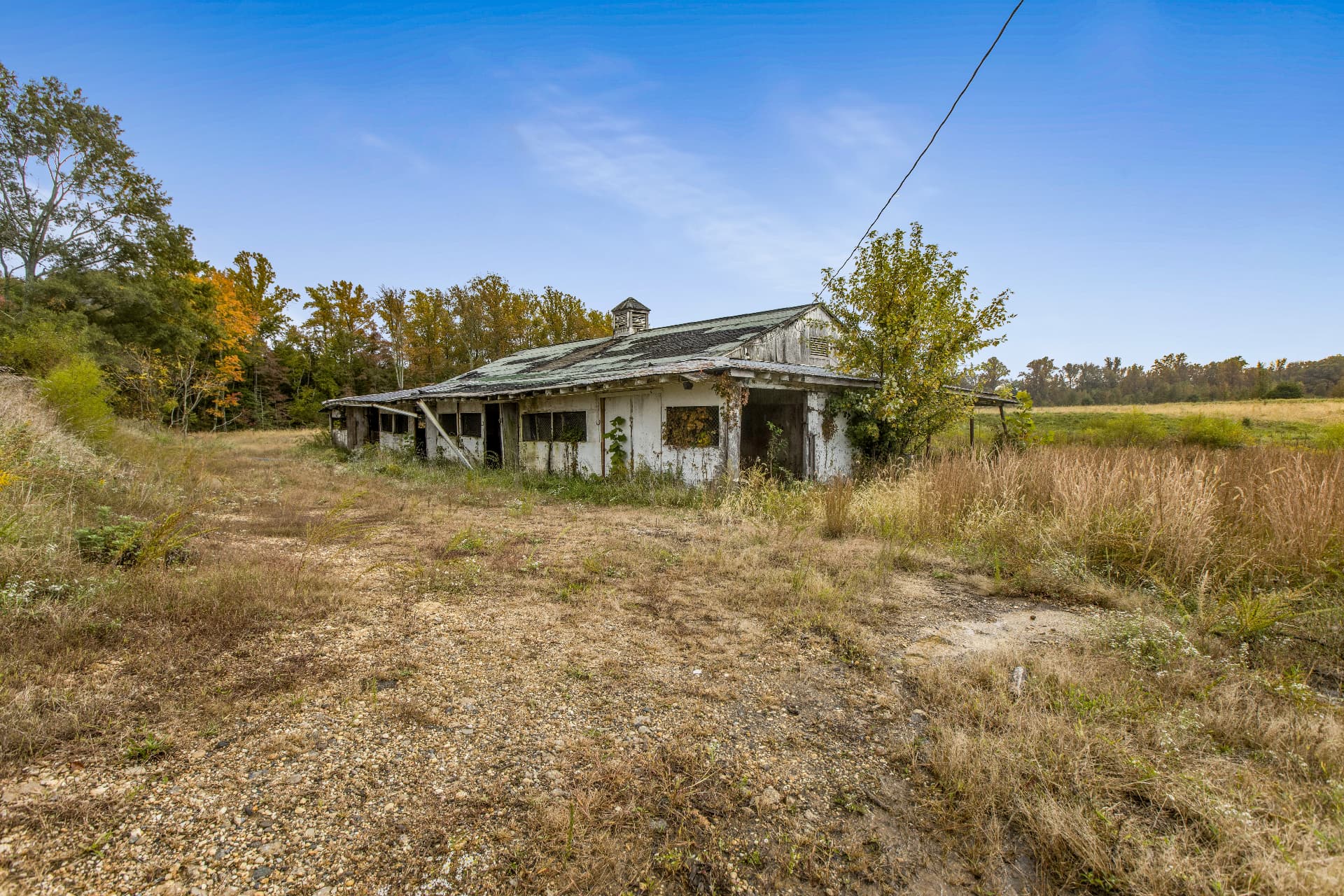
Public programs become real when a farmer can stand in a field, see the practice working, and ask the person who did it how it went.
Farm to Market · Local Food to Community Health
Moving Food From County Farms To County Families
Production
Fruit, vegetable, and specialty crop production planned for local demand rather than commodity markets.
Aggregation
Capacity to combine product from multiple small farms into volumes buyers can actually purchase.
Distribution
Handling, cold chain, and logistics practice that keeps quality intact between field and buyer.
Commerce
Market days, direct sales, nutrition-program purchasing, and institutional buyer readiness.
Food Safety
Wash, pack, cooling, traceability, and documentation taught to the standards institutional buyers require.
Farmer Connectivity
A physical place where producers, buyers, agencies, and educators meet regularly instead of occasionally.
Agritourism to Rural Economic Development
Farm Experiences As Farm Income
- Experiential agriculture and farm visitation
- Educational agriculture for schools and families
- Seasonal events and gathering space
- Culinary and beverage programming
- Crop-share and subscription agriculture
- Farm markets and direct sales
- Guided field and conservation tours
- Rural destination programming for the County's southern tier
Technology to Productivity
Agricultural Technology, Demonstrated Locally
Sensors and Monitoring
Soil moisture, temperature, and environmental monitoring installed where producers can operate it themselves.
Irrigation Control
Scheduling and automation that reduce water use while protecting yield.
Controlled Environment Growing
Planned season extension structures that lengthen the local growing calendar.
Farm Data Systems
Digital recordkeeping, crop planning, and traceability practice on real production records.
Equipment and Automation
Small-scale mechanization matched to the acreage most County farms actually operate.
Applied Trials
Field conditions available to university and agency researchers for practical agricultural testing.
Education to Workforce
Agricultural Education That Ends In A Job
- 01
Youth Agricultural Education
Students working with soil, plants, water, and food production as an introduction to agricultural and scientific careers.
- 02
Adult Instruction
Classroom and field instruction organized around the tasks agricultural employers hire for.
- 03
Apprenticeship Pathways
Structured on-farm learning that pairs instruction with supervised production work.
- 04
Operations and Handling Skills
Post-harvest handling, food safety, equipment operation, and site operations training.
- 05
Career Navigation
Practical guidance toward agricultural employment, further study, and enterprise ownership.
- 06
Employer Engagement
Regional agricultural employers involved in shaping what gets taught.
Instructional programs described as planned or in development remain subject to funding, construction, and applicable approvals.
Chapter Four · The Implementation Opportunity
What Can Actually Happen At Ursery Farms
1. Demonstration
Practices, technologies, and enterprise models shown under local field conditions.
2. Training
Instruction for youth, adult learners, beginning farmers, and working producers.
3. Production
Working fields at Marcellus Farms™ that keep every program grounded in real agriculture.
4. Conservation
Soil, water, nutrient, and habitat practice demonstrated with production results attached.
5. Agricultural Technology
A place where producers can see tools operate before committing capital to them.
6. Market Development
Aggregation, handling, and buyer-readiness capacity for regional producers.
7. Agritourism
Visitation, education, and events that add farm revenue and community connection.
8. Workforce Education
Learning pathways that end in agricultural employment or enterprise ownership.
9. Research
Field space for applied agricultural trials with university and agency researchers.
10. Community Engagement
Open field days, market days, and gatherings that keep neighbors close to the work.
11. Data Collection
Measurement of participation, production, adoption, and market outcomes.
12. Partnership
A single coordinated site where State, County, university, and private partners can work together.
Policy to Practice · Strategy to Soil
A State-to-Local Agricultural Implementation Platform
Maryland sets the strategy.
Prince George's County defines the local opportunity.
Ursery Farms helps build the capacity to implement.
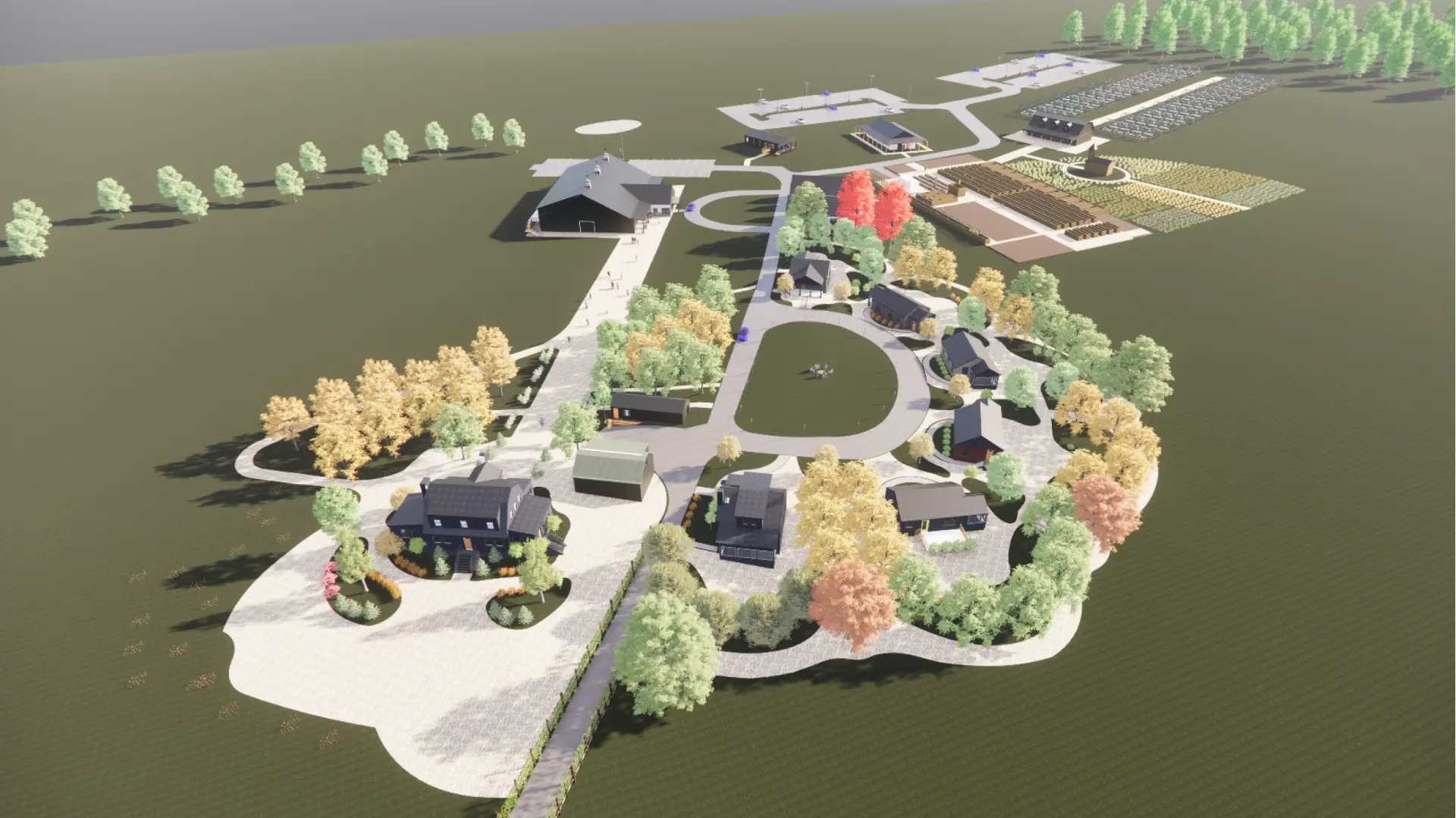
Public policy becomes meaningful when farmers and communities have a place where programs, technology, conservation practices, infrastructure, education, and markets can actually be tested, taught, and implemented.
Partnership & Investment
What Would Make Implementation Possible
- Infrastructure and facility investment
- Conservation demonstration partnerships
- Technical assistance collaboration
- Agricultural technology pilots
- Aggregation and cold storage capacity
- Agritourism development support
- Workforce and apprenticeship partnerships
- Youth agricultural education programming
- Applied research collaboration
- Market and buyer development
- Nutrition-program food access support
- Outcome measurement and reporting
Sources
Public Documents Informing This Page
Governor's Intergovernmental Commission for Agriculture
Maryland's intergovernmental agricultural framework, which coordinates State, local, industry, and community implementation.
Maryland Roadmap to Resilience
State agricultural planning work addressing resilience, producer support, agricultural technology, soil and water management, infrastructure, market diversification, farmland preservation, and profitability.
Chesapeake Bay Legacy Act
Conservation themes including environmental agricultural practice, healthy soils, regenerative practice, community involvement, and farmer conservation incentives.
University of Maryland Extension — Cultivating Conservation (EM-2025-0752)
Extension resource on conservation access, whole-farm planning, technical assistance navigation, and support for small, beginning, and limited-resource producers in Maryland and Delaware.
View the resourcePrince George's County CR-039-2026
County resolution promoting rural agritourism development.
Agriculture and Food Security Innovation Center Feasibility Study
County study addressing farmer connectivity, capacity building, aggregation, distribution, food accessibility, commerce, infrastructure, education, and food-system development.
Advancing Markets for Producers Pilot Program
County program interest in expanding market opportunities, strengthening farm productivity, increasing access to locally grown food, and connecting producers with resources.
Subregion 6 Market Study
Regional study addressing agritourism, experiential and educational agriculture, event venues, culinary and beverage tourism, crop-share agriculture, agrotechnology, production, distribution, logistics, and agricultural innovation.