Federal Priorities
National Priorities. Local Implementation.
Ursery Farms is building the agricultural, educational, technological, and community infrastructure needed to turn national priorities into measurable local outcomes.
Using Marcellus Farms™ as a living laboratory, Ursery Farms connects whole food production, regenerative agriculture, agricultural technology, workforce education, beginning farmer development, food access, research, and resilient infrastructure into one integrated implementation platform.
- MAHA
- Farm Bill
- Agricultural Investment
- Local Implementation
Organization at a glance
- Legal name
- Ursery Farms Limited
- Organization type
- 501(c)(3) nonprofit organization
- EIN
- 92-2335901 (assigned February 14, 2023)
- Location
- 8209 Cedarville Road, Brandywine, Maryland 20613
- Setting
- Rural Southern Maryland, Prince George's County
- Operating asset
- Marcellus Farms™, a working farm used as a living laboratory
- Campus standing
- Engineering, permitting, site preparation, and construction in progress (approximately 75 percent)
- Reporting
- Three-year targets published with the definition behind every figure
Governance and financial documents are published as they become available on the transparency register. No award, application outcome, or agency relationship is claimed anywhere on this page.
Make America Healthy Again
Real Food. Healthy Soil. Healthy Families.
Ursery Farms supports the connection between agriculture, nutrition, prevention, community health, and long term food system resilience.
Our approach brings whole food production, agricultural education, regenerative practices, local food access, farm modernization, and youth engagement together on one working agricultural campus.
How Ursery Farms Implements MAHA
Whole Food Production
Increase production of fresh fruits, vegetables, specialty crops, and other whole foods that can move from farm to family.
Season Extension
Develop ten planned Season Extension Growing Structures (Training Greenhouses) to extend local growing seasons, increase production, support farmer training, and demonstrate controlled environment agriculture.
Regenerative Agriculture
Teach and demonstrate soil health, crop rotation, conservation, water management, resource efficiency, responsible nutrient management, and practical regenerative farming methods.
Food Access
Expand community markets, local distribution, nutrition education, SNAP eligible sales, and other pathways connecting families with locally produced food.
Youth Agriculture and Nutrition
Connect young people with agriculture, STEM, plants, soil, food production, nutrition, environmental science, and agricultural careers.
Farm to School Readiness
Build production, aggregation, food safety, traceability, storage, and distribution capacity that can support schools and other institutions seeking locally produced food.
Farm Modernization
Demonstrate sensors, automation, irrigation controls, farm management technologies, digital recordkeeping, traceability, and precision agriculture.
Small and Beginning Farmer Capacity
Provide demonstrations, technical education, business planning, crop planning, market readiness, technology exposure, and practical training.
The Next Farm Bill
Building the Farm System America Needs Next
The next federal Farm Bill provides an opportunity to strengthen farmers, specialty crop production, agricultural technology, conservation, research, rural infrastructure, local food systems, beginning farmers, workforce development, and agricultural innovation.
Ursery Farms brings these priorities together within one demonstration and training campus.
Farm Bill Priorities in Action
- 01
Beginning Farmer Development
A working campus where new producers learn crop planning, production practice, and farm business fundamentals on real ground.
- 02
Agricultural Workforce Development
Classroom, laboratory, and field instruction structured around the tasks employers in production agriculture actually hire for.
- 03
Precision Agriculture
Sensors, irrigation controls, and farm data systems installed where students and producers can operate them, not only read about them.
- 04
Specialty Crop Production
Fruit, vegetable, and specialty crop plantings that show yield, labor, and market realities at a scale small farms can copy.
- 05
Agricultural Research
A field environment available to university and agency researchers for applied trials on production, water, and soil practice.
- 06
Conservation and Soil Health
Cover cropping, rotation, nutrient management, and water practice demonstrated side by side with production outcomes.
- 07
Rural and Community Infrastructure
Planned education, market, storage, and gathering facilities that give the surrounding community shared agricultural capacity.
- 08
Local and Regional Food Systems
Aggregation, distribution, and market pathways linking regional producers with regional buyers.
- 09
Food Safety and Post Harvest Systems
Washing, packing, cooling, storage, and traceability practice taught to the standards institutional buyers require.
- 10
Agricultural Entrepreneurship
Business planning, direct market development, and diversified revenue instruction for small agricultural enterprises.
- 11
Farm to School Procurement
Production and handling capacity built toward the volume, documentation, and scheduling school systems need.
- 12
Risk Management Education
Practical instruction in recordkeeping, production planning, and the tools producers use to manage weather and market risk.
A Farm Bill Demonstration Site
Ursery Farms is positioned to serve as more than a program participant. It can function as a regional demonstration, training, research, implementation, and data site where policymakers, agencies, producers, students, schools, researchers, and private industry can see how multiple agricultural priorities work together on the ground.
Explore Partnership OpportunitiesFarm Bill reauthorization is a pending federal process. Nothing on this page describes proposed legislation as enacted law.
One Big Beautiful Bill Act
Turning Agricultural Investment Into Local Capacity
Modern Farms
Demonstrate agriculture combined with technology, sensors, data, automation, irrigation management, and resilient infrastructure.
Domestic Food Production
Increase local and regional capacity to grow fresh food and specialty crops.
Research and Innovation
Create a real world environment for testing agricultural technologies, regenerative practices, production systems, water strategies, and food system innovations.
Diversified Farm Businesses
Train farmers in direct markets, agritourism, food entrepreneurship, agricultural technology, institutional procurement, and other diversified revenue opportunities.
Farm Resilience
Demonstrate water systems, soil health, season extension, conservation, protected production, production data, and resilient energy systems.
Local Economic Development
Prepare farmers, technicians, agricultural workers, students, and entrepreneurs for careers and business opportunities within the food and agricultural economy.
Where Policy Becomes Practice
One Campus. Multiple Federal Priorities.
Healthy Food
Increase the production and availability of whole, locally grown foods.
Healthy Soil
Advance regenerative practices, soil health, conservation, and responsible water management.
Strong Farmers
Give beginning and small producers access to knowledge, technology, demonstrations, business support, and markets.
Agricultural Technology
Deploy precision agriculture, automation, sensors, traceability, smart irrigation, and farm data systems.
American Agricultural Workforce
Prepare students and workers for careers in agriculture, food systems, agricultural technology, production, and agribusiness.
Local Food Security
Strengthen local production, aggregation, storage, distribution, and institutional purchasing.
Community Resilience
Develop infrastructure supporting food, agriculture, education, workforce development, water, energy, and continuity of operations.
Measurable Outcomes
Track food production, training, farmer participation, food distribution, resource performance, technology adoption, and workforce results.
Measurable Impact
From Federal Investment to Measurable Outcomes
- Students Trained
- 120
- Certificates Completed
- 24
- Internships and Apprenticeships
- 30
- Beginning Farmers Assisted
- 30
- Produce Distributed
- 75,000 lbs
- Community Volunteers Engaged
- 300
Figures are initial three-year campus targets, not results. Targets are contingent upon funding and construction completion.
Funding Priorities Matrix
What support would fund, and how it would be measured
| Priority area | National alignment | Use of funds | Measured outcome | Current standing |
|---|---|---|---|---|
| Season extension and protected production | Specialty crop production; nutrition and whole food supply | Ten planned growing structures, irrigation controls, environmental monitoring | Pounds of produce grown and distributed; weeks of extended season | Construction in progress |
| Agricultural education and workforce | Agricultural workforce development; youth agriculture and STEM | Classroom and laboratory build-out, instructional equipment, instructors, scholarships | Students trained; credentials completed; internships placed | Curriculum in development |
| Beginning and small producer support | Beginning farmer development; farm business viability | Technical assistance, shared equipment, crop and business planning, mentorship | Beginning farmers assisted; farm plans completed | Pilot design |
| Regenerative practice and conservation | Soil health, nutrient management, water stewardship | Cover crop and rotation demonstrations, irrigation modernization, soil and water monitoring | Acres under demonstrated conservation practice; resource use tracked | Field demonstration underway |
| Agricultural technology demonstration | Precision agriculture; farm modernization and traceability | Sensors, automation, farm management software, data collection systems | Technologies demonstrated; producers and students trained on each system | Planned |
| Food access and local distribution | Local and regional food systems; nutrition incentive delivery | Aggregation, cold storage, packing, market operations, community distribution | Pounds distributed; SNAP-eligible sales; households served | Operating at pilot scale |
| Institutional and farm to school readiness | Institutional procurement; food safety and traceability | Post-harvest handling, food safety systems, recordkeeping, delivery capacity | Institutional buyers supplied; food safety standards met | Capacity building |
| Rural community facilities | Rural infrastructure and community capacity | Education, market, storage, and gathering facilities on campus | Facilities completed and hours of community use | Construction in progress |
Standing reflects the campus development schedule as of this publication. Planned facilities are not yet complete, and every target is contingent upon funding and construction completion.
Implementation Capacity
Federal Programs We Can Help Implement
Farm to school and institutional food
Production, food safety, storage, and delivery capacity structured for school systems and other institutional buyers.
Our roleImplementation site and regional aggregation point
Nutrition incentives and food access
Community market operations able to accept and match nutrition benefits, paired with nutrition education.
Our roleCommunity distribution partner
Beginning farmer and rancher development
Instruction, mentorship, land-based practice, and business planning for producers in their first decade of farming.
Our roleTraining delivery site
Conservation and working lands practice
Soil health, nutrient, irrigation, and cover crop practice demonstrated on production acreage.
Our roleDemonstration and producer education site
Specialty crop production and marketing
Fruit, vegetable, and specialty crop trials with market development for small regional producers.
Our roleProduction and demonstration site
Rural community facilities and infrastructure
Education, market, storage, and gathering facilities serving a rural county community.
Our roleFacility owner and operator
Workforce and registered apprenticeship pathways
Classroom instruction paired with on-farm hours, employer engagement, and placement tracking.
Our roleTraining provider and worksite
Applied agricultural research and extension
Field environment available to universities and agencies for applied production, soil, and water trials.
Our roleHost research and demonstration site
Youth agriculture and STEM engagement
School and out-of-school programming connecting young people with plants, soil, food production, and agricultural careers.
Our roleProgram host
Agricultural technology and precision agriculture
Installed sensing, automation, and data systems operated by students and visiting producers.
Our roleTechnology demonstration site
Local and regional food system development
Aggregation and distribution linking regional producers to regional buyers.
Our roleRegional hub
Value-added production and food entrepreneurship
Processing, packaging, and business instruction for producers building diversified revenue.
Our roleTraining and incubation site
Federal Partnership Priorities
What Investment Would Unlock
1. Healthy Food Production and Access
Support growing, harvesting, washing, packing, cooling, storage, distribution, aggregation, community markets, and institutional food infrastructure.
2. Regenerative Agriculture and Natural Resources
Support whole farm conservation planning, soil health, water management, irrigation modernization, resource monitoring, research, demonstration projects, and farmer education.
3. Agricultural Technology and Innovation
Support sensors, automation, precision irrigation, production management systems, traceability, laboratory technology, data collection, and farm technology demonstrations.
4. Agricultural Education and Workforce
Support classrooms, laboratories, training equipment, instructors, scholarships, youth agriculture, internships, apprenticeship pathways, and employer partnerships.
5. Beginning Farmer and Small Business Development
Support technical assistance, farm business education, financing readiness, crop planning, mentorship, shared infrastructure, market development, and entrepreneurship.
6. Local Food Markets and Procurement
Support farm to school relationships, institutional food purchasing, aggregation, community distribution, SNAP eligible sales, food safety, cold storage, and regional market connections.
Local Enough to Test. Structured to Scale.
A Southern Maryland Demonstration for American Agriculture
Ursery Farms is developing a model that demonstrates how public investment, private innovation, agriculture, education, technology, and community partnerships can work together.
The goal is not simply to build one successful farm. The goal is to build systems that farmers, students, schools, communities, researchers, workforce organizations, government agencies, and agricultural partners can measure, learn from, adapt, and replicate.
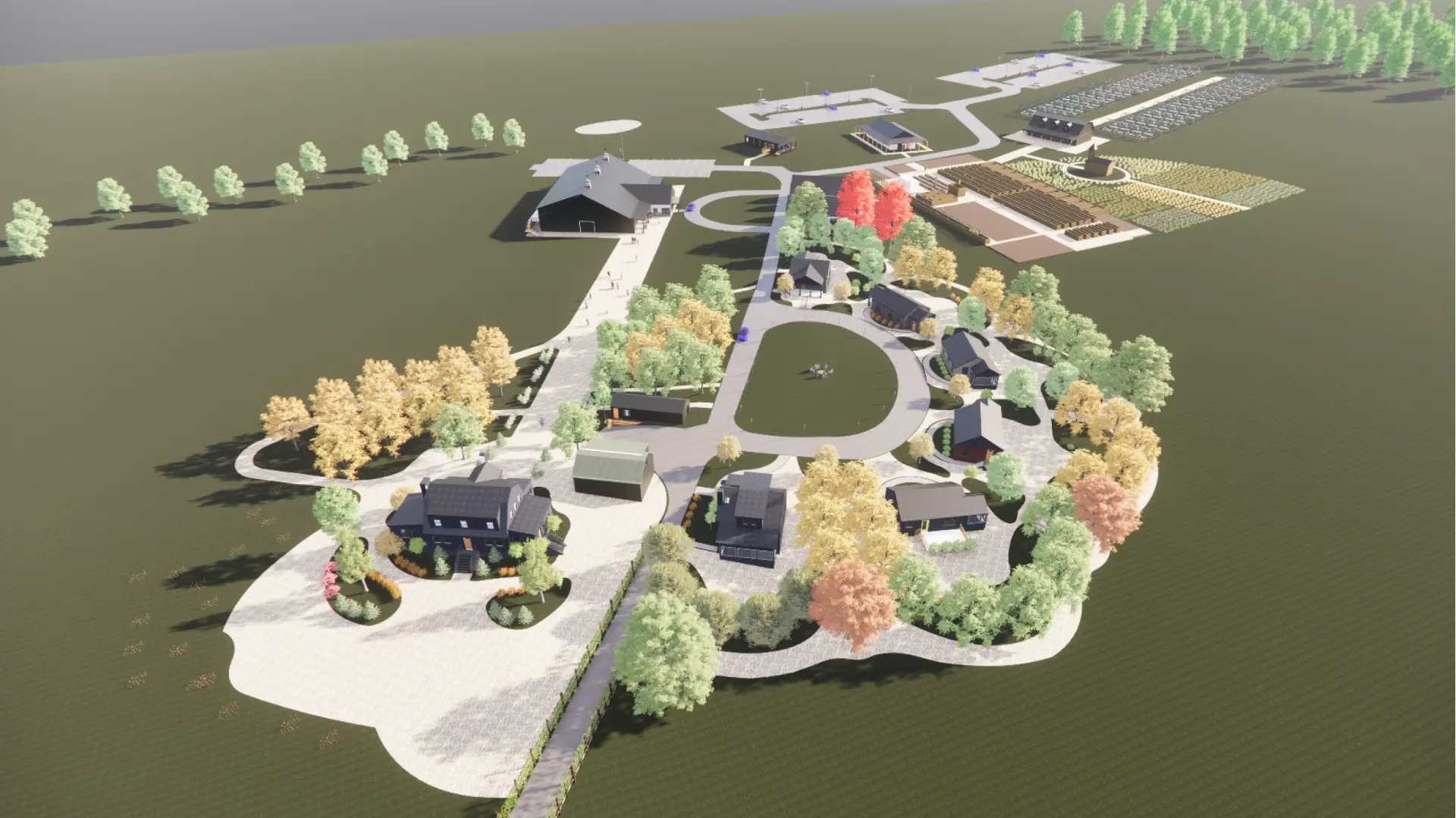
That is how national agricultural priorities become local capacity. That is how local capacity strengthens American agriculture.
Partnership Ecosystem
The organizations this work is built to engage
- USDA
- Federal agencies
- State agencies
- Local government
- Schools
- Colleges and universities
- Workforce agencies
- Agricultural researchers
- Conservation organizations
- Health systems
- Food buyers
- Agricultural technology companies
- Foundations
- Corporations
- Farmers
- Community organizations
Partner With Ursery Farms
Help Build the Implementation Infrastructure.
- Capital and infrastructure investment
- Federal and state program partnerships
- Research projects
- Demonstration projects
- Agricultural technology pilots
- Conservation demonstrations
- Workforce partnerships
- Apprenticeships
- Farm to school procurement
- Institutional food purchasing
- Equipment sponsorship
- Scholarships
- Beginning farmer assistance
- Food access programs
- Data and impact measurement
- Community health initiatives
Bring Policy to the Farm.
Bring Innovation to the Farmer.
Bring Healthy Food to the Community.
Build the Future of American Agriculture With Ursery Farms™.